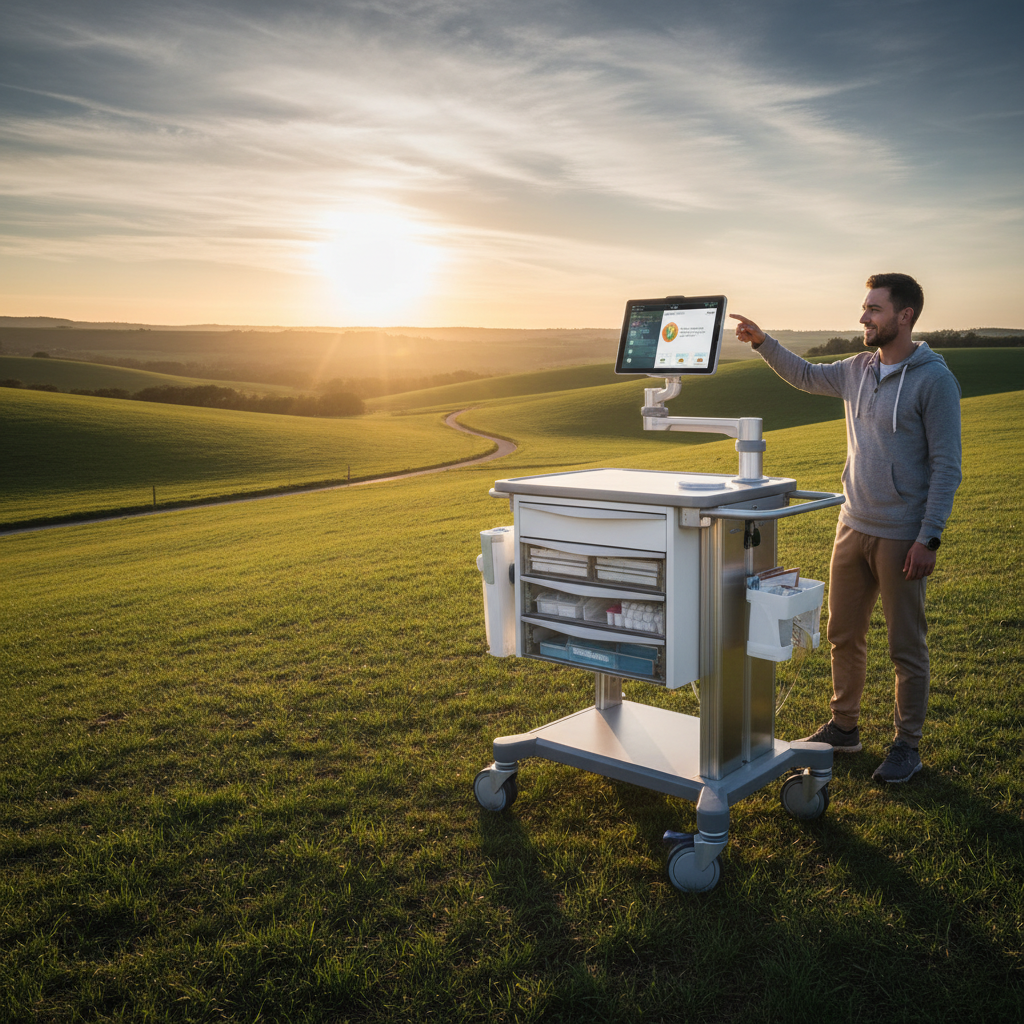
Hospital trolleys are indispensable tools within healthcare facilities worldwide, serving as mobile workstations for medical professionals. Their prevalence stems from the need for efficient and safe transportation of medications, supplies, and patient documentation. From bustling city hospitals to remote rural clinics, the hospital trolley ensures crucial resources are readily accessible when and where they are needed, directly impacting patient care quality. The continuous evolution of these trolleys, focusing on features like enhanced maneuverability and improved hygiene, reflects a commitment to optimizing healthcare workflows.
The global demand for hospital trolleys is consistently high, driven by factors such as aging populations, increasing rates of chronic diseases, and the expansion of healthcare infrastructure, particularly in developing nations. According to the World Health Organization, access to essential medical supplies is a critical component of universal health coverage. Hospital trolleys directly address this need by enabling streamlined logistics within medical settings. Innovation in materials, design, and integrated technologies continue to shape the future of these essential pieces of medical equipment.
Challenges such as maintaining infection control, ensuring durability in high-usage environments, and optimizing space utilization are central to the ongoing development of hospital trolleys. Addressing these concerns not only improves operational efficiency but also contributes to a safer and more effective healthcare environment for both patients and staff. The development of specialized trolleys catered to specific departments, like anesthesia or emergency care, demonstrate the industry's responsiveness to evolving healthcare demands.
Introduction: The Vital Role of Hospital Trolley
The hospital trolley is far more than just a wheeled cart; it’s a mobile extension of the clinical workspace, directly contributing to streamlined patient care and improved operational efficiency. Its primary function is to facilitate the movement of essential supplies – medications, dressings, instruments, and documentation – from central storage to the point of need. A well-designed hospital trolley enhances accessibility, reduces wasted time for medical personnel, and ultimately supports better patient outcomes.
Modern healthcare relies heavily on the swift and accurate delivery of resources. The hospital trolley serves as a critical link in this process. It’s particularly vital in emergency situations, where seconds can make the difference between life and death. The design and functionality of a hospital trolley are constantly being refined to meet the evolving demands of the healthcare landscape, incorporating features that prioritize safety, hygiene, and ease of use.
Defining the Hospital Trolley
A hospital trolley, in its simplest form, is a mobile cart specifically designed for use in healthcare settings. It typically features multiple shelves or compartments, allowing for organized storage of various medical supplies. These trolleys are constructed from durable materials, often stainless steel or high-grade plastics, and are equipped with smooth-rolling casters for easy maneuverability. Their design prioritizes both functionality and hygiene, with features like easy-to-clean surfaces and enclosed compartments.
The connection between hospital trolleys and modern healthcare is undeniable. As healthcare systems become more complex and patient care models evolve, the need for efficient logistics within hospitals and clinics grows. Hospital trolleys are not merely storage units; they are integrated components of workflows, helping to reduce the risk of errors, improve response times, and enhance overall patient safety. They are a foundational element of a well-organized and responsive healthcare environment.
Different types of hospital trolleys cater to specific needs. Anesthesia trolleys, emergency trolleys, medication trolleys, and dressing trolleys are just a few examples. Each type is tailored with specialized features and configurations to support specific clinical procedures and departments. Selecting the right hospital trolley is crucial for optimizing workflow and ensuring efficient patient care.
Key Components of a Reliable Hospital Trolley
Durability is paramount. Hospital trolleys endure constant use and must withstand the rigors of a busy healthcare environment. High-quality materials and robust construction are essential to ensure longevity and minimize the need for frequent replacements. A reliable hospital trolley provides years of dependable service, contributing to cost savings and operational efficiency.
Maneuverability is critical. Smooth-rolling casters, ideally with locking mechanisms, are necessary for effortless movement and secure positioning. The trolley should be easy to navigate through narrow corridors and around obstacles, allowing healthcare professionals to quickly access supplies wherever they are needed. Ergonomic handles also contribute to ease of use.
Hygiene is non-negotiable. Hospital trolleys must be easy to clean and disinfect to prevent the spread of infection. Smooth, non-porous surfaces, enclosed compartments, and antimicrobial coatings are important features. Regular cleaning protocols and the use of appropriate disinfectants are essential for maintaining a sterile environment.
Practical Applications Across Healthcare Settings
Hospital trolleys are ubiquitous throughout hospitals, playing a critical role in a wide range of departments. In emergency rooms, emergency trolleys stocked with life-saving equipment are essential for rapid response. In operating rooms, surgical trolleys organize instruments and supplies for precise procedures.
Medication trolleys ensure secure and accurate dispensing of pharmaceuticals. Wound care trolleys facilitate efficient and hygienic dressing changes. Even in outpatient clinics and rehabilitation centers, hospital trolleys enhance workflow by providing readily accessible supplies for patient care.
Hospital Trolley Application Ratings by Department
Advantages and Long-Term Value of Hospital Trolleys
The primary benefit of using hospital trolleys is enhanced efficiency. By centralizing and mobilizing essential supplies, they reduce the time medical professionals spend searching for items, allowing them to focus more on patient care. This translates to faster response times, improved workflow, and a more productive healthcare environment.
Beyond efficiency, hospital trolleys contribute to improved safety and reduced risk of errors. Organized storage minimizes the chance of misplacing items or administering incorrect medications. Durable construction and secure locking mechanisms prevent accidental spills or falls, protecting both patients and staff. The long-term value is derived from reduced operational costs, fewer errors, and a safer working environment.
Global Applications and Diverse Use Cases
Hospital trolleys are utilized globally, forming an integral part of healthcare systems in both developed and developing countries. In resource-constrained settings, they are particularly valuable for optimizing limited supplies and ensuring equitable access to care. From large metropolitan hospitals to remote rural clinics, the fundamental need for mobile supply organization remains constant.
In post-disaster relief operations, portable hospital trolleys are deployed to provide immediate medical support to affected populations. These trolleys are often equipped with essential medications, wound care supplies, and diagnostic tools, enabling healthcare professionals to respond effectively to emergency situations. Similarly, in remote industrial zones or on offshore oil rigs, hospital trolleys provide essential medical support where access to traditional healthcare facilities is limited.
International organizations, such as Doctors Without Borders and the Red Cross, frequently rely on hospital trolleys to deliver medical care in conflict zones and humanitarian crises. These trolleys are designed to be durable, lightweight, and easily transportable, allowing healthcare workers to provide critical medical assistance in challenging environments.
Future Trends and Innovations in Hospital Trolley Technology
The future of hospital trolley technology is focused on integration with digital systems and automation. Smart trolleys equipped with RFID tagging and inventory management systems will enable real-time tracking of supplies, reducing waste and ensuring optimal stock levels. Integrated electronic health record access will allow medical professionals to access patient information directly from the trolley, streamlining workflows.
Sustainability is also a growing trend. Manufacturers are exploring the use of recycled materials and environmentally friendly manufacturing processes. The development of modular trolley systems, allowing for customization and adaptability, will further reduce waste. The incorporation of antimicrobial materials and self-disinfecting technologies will continue to enhance hygiene and infection control.
Advancements in materials science, such as the use of lightweight alloys and composite materials, will lead to more durable and maneuverable trolleys. The integration of artificial intelligence (AI) could enable predictive maintenance and optimize trolley usage patterns, further improving efficiency and reducing costs.
Summary of Key Future Trends for Hospital Trolleys
| Trend Category |
Description |
Impact on Healthcare |
Implementation Timeline |
| Smart Trolleys & IoT Integration |
Integration of RFID, sensors, and connectivity for real-time tracking. |
Reduced inventory costs, improved supply chain management, enhanced patient safety. |
Short-term (1-3 years) |
| Sustainable Materials |
Utilizing recycled plastics, lightweight alloys, and bio-based materials. |
Reduced environmental impact, improved brand image, cost savings. |
Medium-term (3-5 years) |
| Antimicrobial Technologies |
Incorporating antimicrobial coatings and self-disinfecting surfaces. |
Reduced risk of hospital-acquired infections, improved patient safety. |
Short-term (1-3 years) |
| Modular Design |
Creating trolleys with interchangeable components for customized configurations. |
Increased flexibility, reduced waste, optimized space utilization. |
Medium-term (3-5 years) |
| AI-Powered Maintenance |
Predictive maintenance based on usage data and sensor readings. |
Reduced downtime, extended trolley lifespan, lower maintenance costs. |
Long-term (5+ years) |
| Ergonomic Enhancements |
Improved handle designs, adjustable height features, and optimized weight distribution. |
Reduced strain on healthcare workers, improved user comfort, increased safety. |
Short-term (1-3 years) |
FAQS
When choosing a hospital trolley, prioritize durability, maneuverability, hygiene, and capacity. Consider the specific needs of your department, the types of supplies you’ll be transporting, and the environment in which the trolley will be used. Look for features like smooth-rolling casters, easy-to-clean surfaces, and secure locking mechanisms. Also, ensure the trolley meets relevant safety standards and regulations.
Hospital trolleys should be cleaned and disinfected regularly, ideally after each use or at least daily, depending on the level of contamination risk. Use a hospital-grade disinfectant that is effective against a broad spectrum of pathogens. Pay particular attention to high-touch surfaces, such as handles, shelves, and casters. Follow your facility's infection control protocols.
The weight capacity of a hospital trolley varies depending on its size, construction, and design. Generally, standard hospital trolleys can hold between 50 and 150 kilograms (110 to 330 pounds). Always check the manufacturer's specifications to ensure you do not exceed the maximum weight limit, as overloading can compromise stability and safety.
Yes, there are specialized hospital trolleys designed for specific departments. For example, anesthesia trolleys include gas tanks and monitoring equipment holders, while emergency trolleys contain essential resuscitation equipment. Medication trolleys often have secure, lockable drawers for controlled substances. Wound care trolleys feature dedicated compartments for dressings and instruments.
Hospital trolleys are commonly constructed from stainless steel, aluminum, and high-grade plastics. Stainless steel is preferred for its durability, corrosion resistance, and ease of cleaning. Aluminum is lightweight and strong, while plastics offer cost-effectiveness and versatility. The choice of material depends on the specific application and budget.
Verify that the hospital trolleys comply with relevant safety standards such as ISO 13485, IEC 60601-1 and local regulations. Look for certifications and markings indicating compliance. Regularly inspect the trolleys for any damage or defects, such as loose casters or cracked surfaces. Ensure casters have effective locking mechanisms to prevent unintended movement.
Conclusion
In conclusion, the hospital trolley remains a fundamental and evolving component of modern healthcare. From its core function of facilitating efficient supply transport to its increasing integration with smart technologies and sustainable materials, the hospital trolley continuously adapts to meet the changing needs of healthcare professionals and patients alike. Prioritizing durability, maneuverability, hygiene, and safety ensures these vital tools contribute to optimal patient care and operational efficiency.
Looking ahead, the continued innovation in hospital trolley technology promises to further enhance healthcare workflows and improve patient outcomes. Embracing features such as real-time inventory tracking, antimicrobial coatings, and ergonomic designs will create a safer, more efficient, and more sustainable healthcare environment. For reliable and innovative hospital trolley solutions, visit our website: www.cnboxin.com.