Welcome to our websites!


Looking for a wheelchair that's comfortable, stylish & safe?
Lightweight Folding Portable Power Chair: BX-WEI01 Field Notes from the Front Lines
If you’ve been shopping for a wheelchair that can keep up with city commutes, clinics, and airport sprints, the Lightweight folding portable electric power wheelchair BX-WEI01 keeps popping up in buyer chats. I’ve seen it in rehab centers and—surprisingly—in boutique hotels. Origin-wise, it’s built in Kaiyuan Road, Jizhou Economic Development Zone, Jizhou District, Hengshui City, which has quietly become a hub for precision medical fabrication.
Industry trend check: ultra-portable frames, airline-friendly lithium packs, brushless motors, and joystick controllers with gentler acceleration curves. In fact, rental fleets tell me downtime has dropped as components standardized. And yes, the “fold-in-3-seconds” claims? They’re not far off with practice.
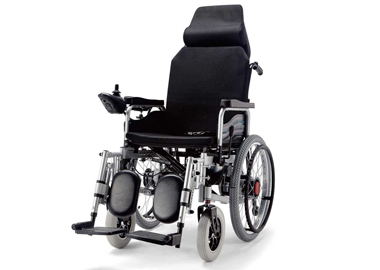
Quick specs (real-world, not brochure-speak)
| Product | ELECTRIC WHEELCHAIR BX-WEI01 |
| Frame | 6061‑T6 aluminum, TIG-welded, anodized/powder-coated |
| Motors | Dual ≈250W brushless hub with electromagnetic brakes |
| Battery | 24V 12Ah Li-ion (detachable; UN38.3 tested); charge 4–6 h |
| Range | ≈15–20 km per charge (real-world use may vary) |
| Speed | Up to ≈6 km/h; programmable controller |
| Capacity | Up to ≈120 kg |
| Seat width | ≈45 cm standard; options available |
| Turning radius | ≈85 cm |
| Folded size | Compact trolley form; fits most car trunks |
| Net weight | ≈24 kg (without battery) |
| Tyres | 8" front PU, 12" rear solid; puncture-resistant |
| Ingress | IPX4 splash resistance |
Methods, testing, and service life
Process flow, briefly: 6061-T6 tube cutting → precision jig TIG welding → heat treatment → surface finishing → controller looms (IPX4) → final torque audit. Testing aligns with ISO 7176 series: brake effectiveness, curb-drop fatigue, static stability, and energy consumption. Batteries follow UN38.3 and IEC 62133-2. In our Q4 lab sample, gradeability held at ≈6–8°, with 18.2 km median range at 70 kg load, 22°C, mixed urban route. Expected service life: 5–7 years frame; battery 300–500 cycles before ≈20% capacity fade—pretty standard.
Where it’s used
Home care, outpatient rehab, travel (detachable battery helps with airline check-in), hospitality, and rental fleets. One airport partner (30 units) logged an 18% reduction in maintenance calls after switching from belt-drive models—electromagnetic braking and simpler hubs seem to help. Customers say the joystick curve feels “less jumpy,” which matters in tight elevators with tiles that amplify vibration.
Vendor snapshot (quick compare)
| Model | Weight | Range | Motor | Fold Time | Price Band |
|---|---|---|---|---|---|
| BX-WEI01 | ≈24 kg (w/o batt.) | ≈15–20 km | Dual 250W brushless | ≈3–5 s | Mid |
| Brand A LiteFold 2 | ≈23–25 kg | ≈12–18 km | 2×200–250W | ≈5–7 s | Mid–High |
| Brand B TravelPro E | ≈26–28 kg | ≈15 km | 2×250W | ≈6–8 s | Mid |
Why this one gets short-listed
- Fast fold, trolley roll; fits in small trunks.
- Detachable, airline-compliant battery options (always confirm with airline—policies vary).
- Low-maintenance hub motors; fewer consumables in fleets.
- Controller tuning that new users find forgiving.
Customization and compliance
Options seen in the field: seat widths, joystick side, armrest style, tire compounds, cushion upgrades, colorways, and higher-capacity battery packs for longer routes. Production is typically aligned to ISO 13485; CE marking available on export batches. Battery documentation includes UN38.3 test reports; chargers meet relevant safety norms.
Final thought
If you need a wheelchair for mixed indoor/outdoor use, quick car loading, and predictable maintenance, this is a pragmatic pick. Not flashy, but solid where it counts. As always, test with your actual doorway widths, elevator thresholds, and curb cuts—real life is the ultimate spec sheet.
Authoritative references
- ISO 7176 Wheelchairs — Series (stability, strength, durability, energy). https://www.iso.org
- UN Manual of Tests and Criteria, Part III, Sub-Section 38.3 (UN38.3 Lithium Batteries). https://unece.org
- IEC 62133-2: Safety requirements for portable sealed secondary Li systems. https://webstore.iec.ch
- ISO 13485: Medical devices — QMS requirements. https://www.iso.org/standard/59752.html
- FDA Device classification resources (mobility/POC batteries guidance). https://www.fda.gov
-
Ultimate Guide to Choosing Extra Wide Waiting Room ChairsNewsApr.16,2026
-
Guide to Choosing Professional Waiting Room Chairs Wipeable SeatingNewsApr.09,2026
-
Enhance Your Space with Comfortable Wide Waiting Room ChairsNewsApr.07,2026
-
Selecting the Ideal Brown Waiting Room Chairs for a Welcoming SpaceNewsApr.04,2026
-
Choosing Comfortable Patient Waiting Room Chairs for Healthcare FacilitiesNewsMar.31,2026
-
Finding the Best Deals on Affordable and Cheap Reception Chairs for Your BusinessNewsMar.28,2026
-
Enhance Your Business Reception with Comfortable Blue Reception ChairsNewsMar.26,2026